How to Handle a Whole-Home Drain Backup: A Sweetwater Case and Tips
Explore our services: Plumbing, Sweetwater, Plumbing in Sweetwater
When all the drains in your house start backing up at once, it can feel like an emergency. That’s exactly what happened to a homeowner in Sweetwater when their laundry connections overflowed and every fixture showed signs of a clog. In this case, a HEP technician stepped in to diagnose the problem, recommend a precise fix, and restore smooth flow—all without tearing up more of the yard or porch than necessary.
Case Overview
- Issue: Complete home drain backup, despite individual fixtures appearing clear
- Investigation: No clean-out access indoors, so the technician used a drain camera and snake to clear debris and pinpoint the trouble spot
- Diagnosis: A crack in the aging cast-iron main line beside a large tree caused recurring blockages
- Solution: A 5-foot “spot repair” replaced just the damaged pipe section with modern PVC, added a clean-out for future access, and limited excavation to protect the existing porch and concrete
1. Recognizing Hidden Main-Line Breaks
Even if sinks and tubs seem to drain normally, a hidden break or collapse in the main sewer pipe can let debris collect underground until the entire system backs up. Signs to watch for:
- Multiple fixtures slowing down at once
- Unusual pooling or soggy spots in the yard
- Gurgling sounds in drains
2. The Power of Video Inspection
Before any digging begins, ask for a camera inspection. A flexible drain camera can:
- Locate cracks or root intrusions
- Show exactly where blockages occur
- Prevent unnecessary trenching
3. Choosing Targeted Repairs
Rather than replacing the entire old line, homeowners can often opt for a small-section replacement—also called a spot repair. This approach:
- Saves time and disruptions
- Limits yard and driveway disturbances
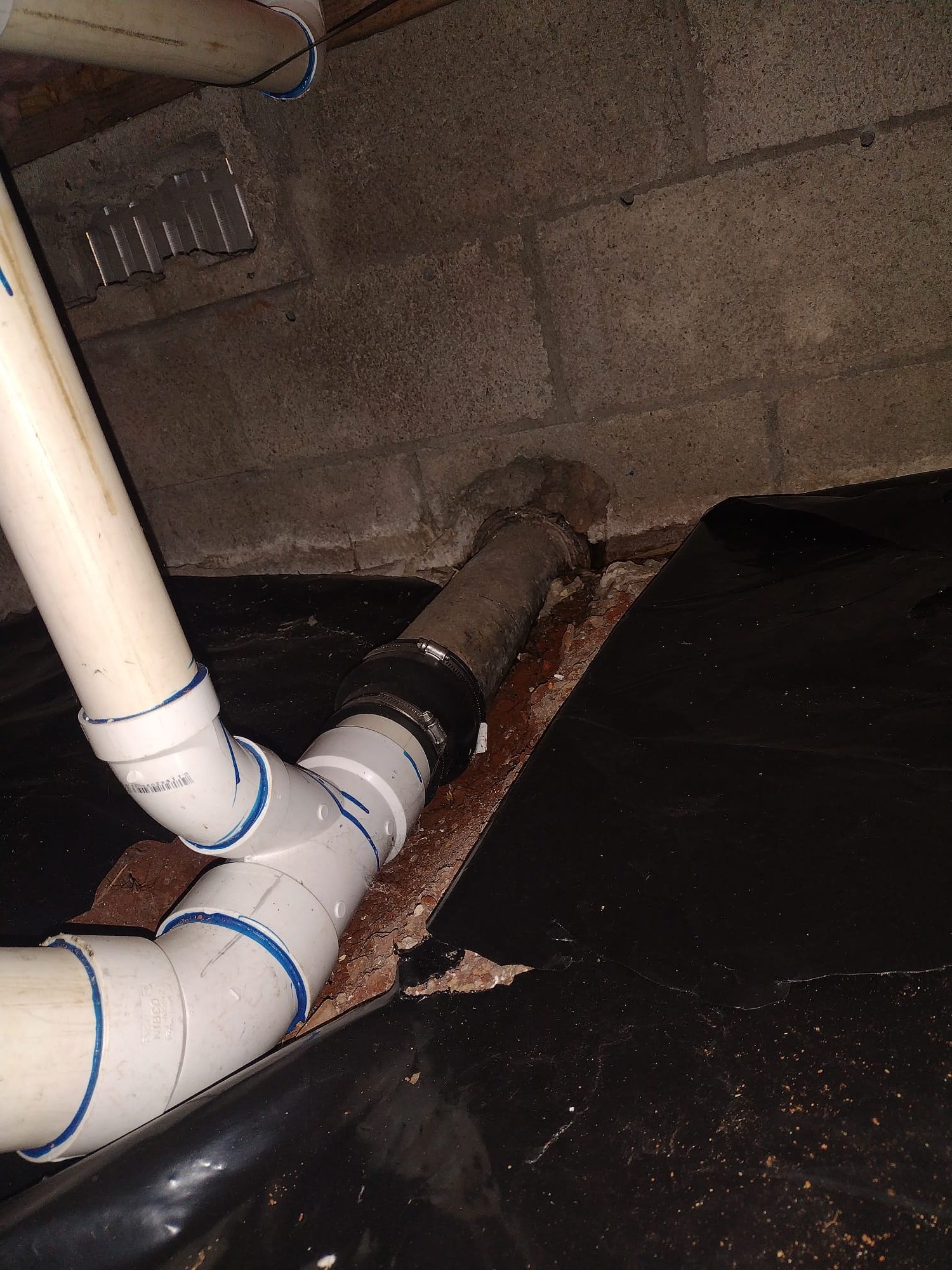
- Allows modern materials (PVC) to integrate with cast iron using secure couplings
Below, you can see how a transition fitting (a durable coupling) joins new PVC piping to the existing cast-iron line inside a crawl space:
4. Performing the Spot Repair
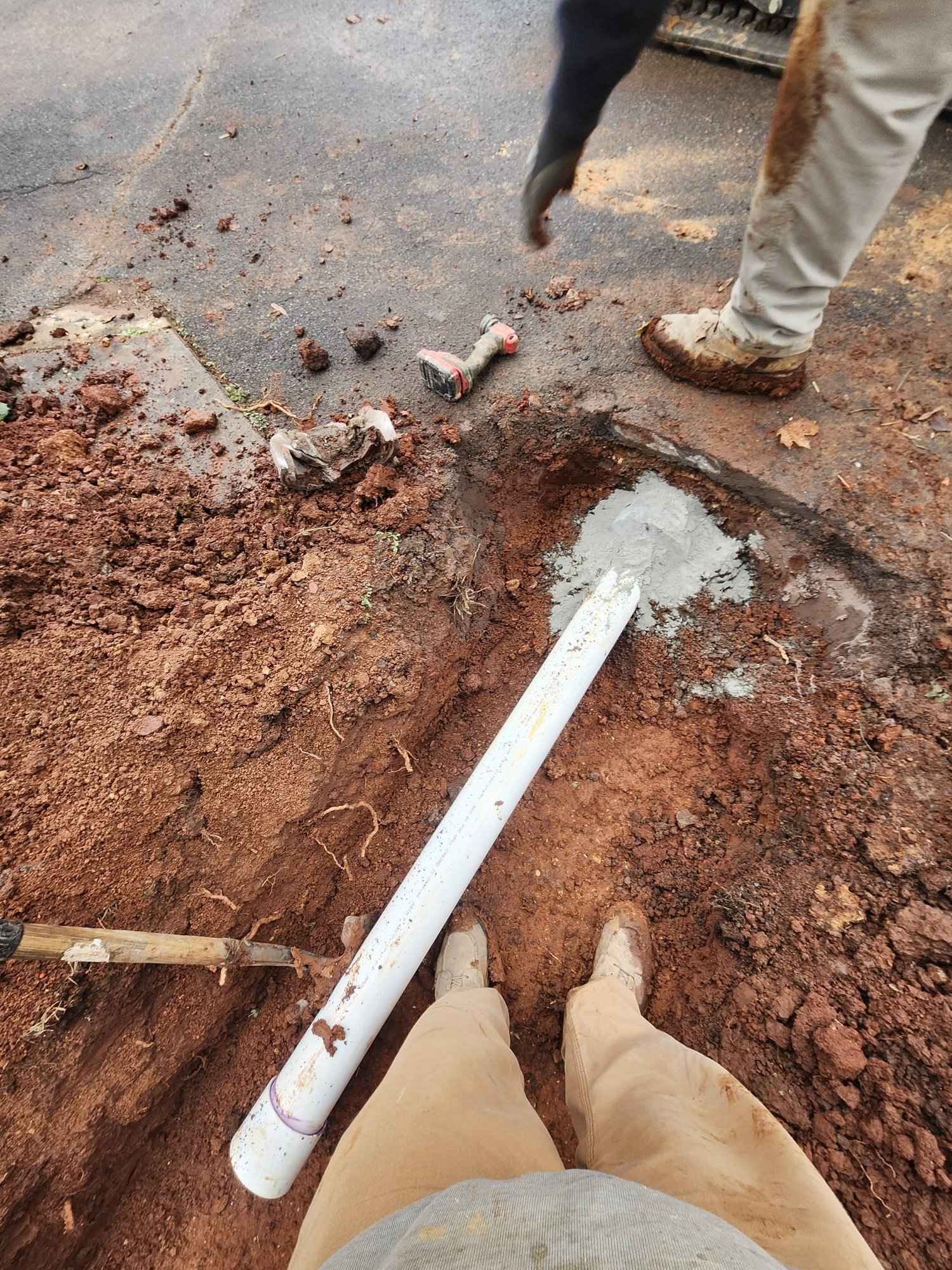
With the break located, the HEP technician used a mini-excavator to dig only where needed, then replaced the damaged 5-foot section with sturdy schedule-40 PVC. Connections were sealed and pressure-tested before backfilling:
5. Restoring Your Yard
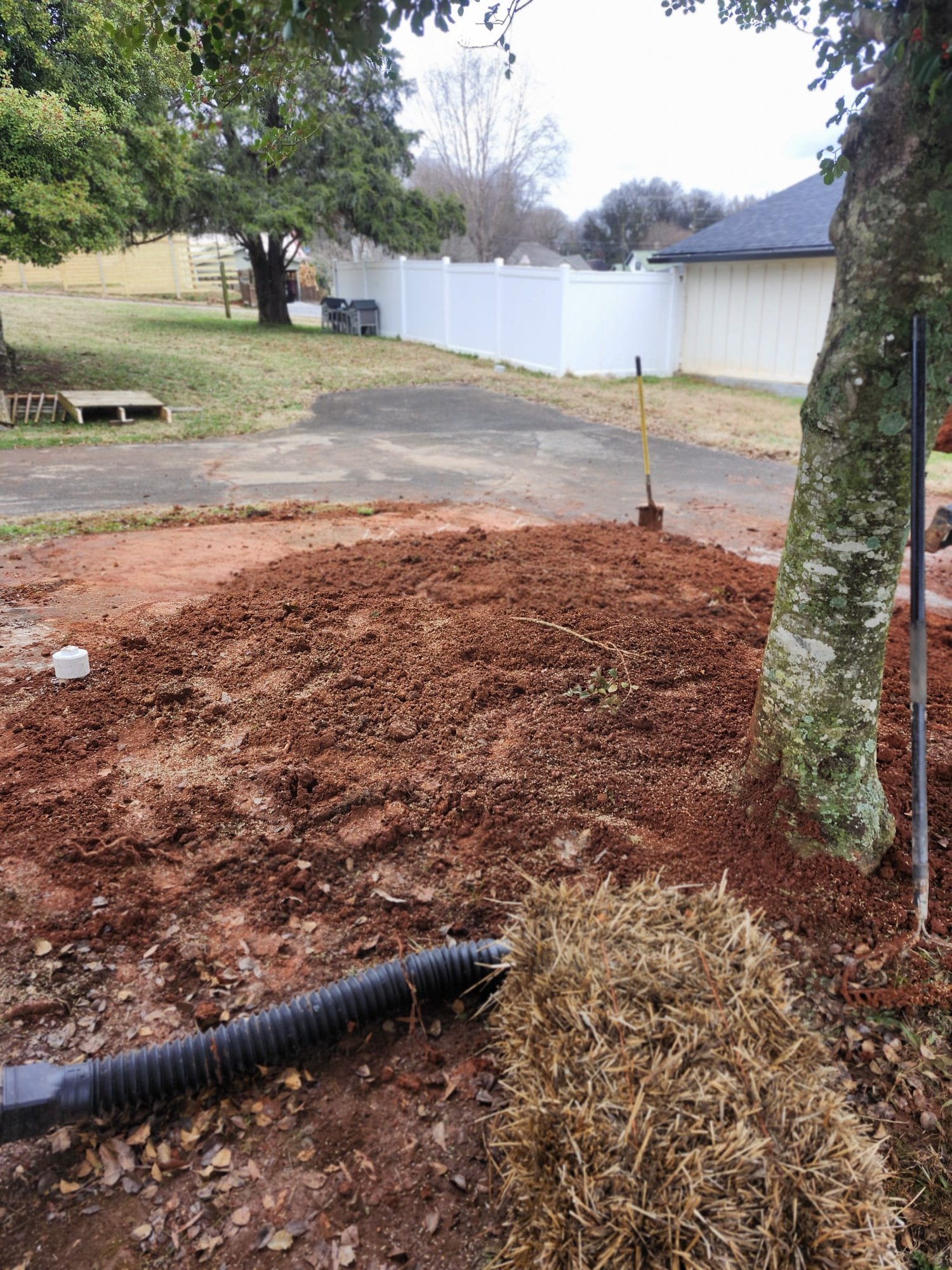
Once pipes are secure, the trench is backfilled and the surface is prepared for quick recovery. Light tilling, grass seed, and straw help return your lawn to its pre-repair state:
6. Installing an Accessible Clean-Out
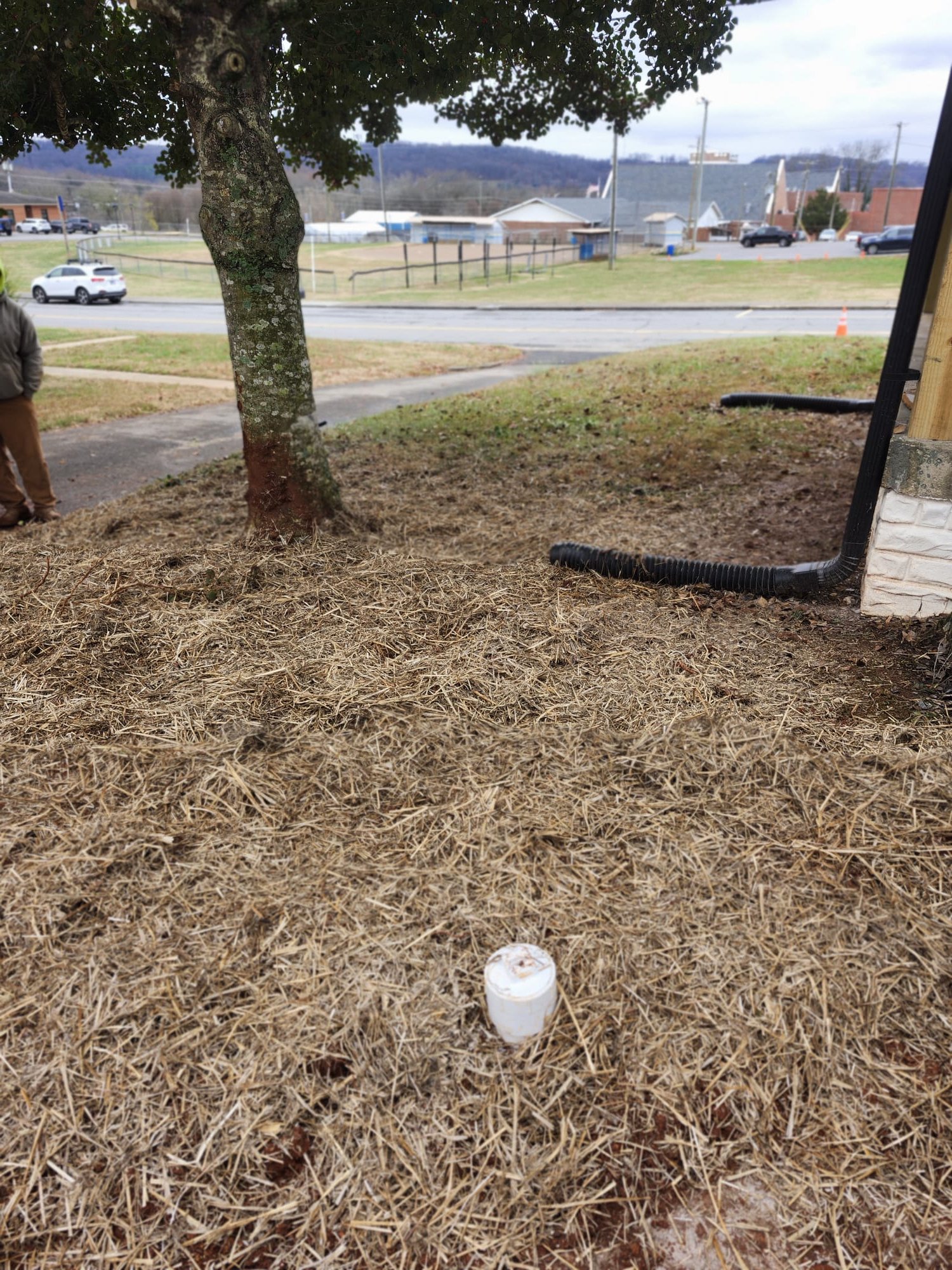
A small access point, or clean-out, makes future inspections and minor clearing much easier. A final layer of straw protects new seed and prevents erosion:
Key Takeaways for Homeowners
- Early Video Checks: Catch main-line issues before a full backup.
- Spot Repairs: Replace only the bad section to save time, money, and landscaping.
- Clean-Outs: Add an access point for quick, future maintenance.
- Professional Excavation: Limit digging to preserve existing structures.
- Yard Restoration: Topsoil, seed, and straw ensure a neat finish.
If you ever face slow drains or suspect a deeper problem, call on a trusted HEP technician to assess and solve the issue with minimal fuss—especially if you’re in the Sweetwater area. With the right approach, what starts as a frightening backup can end with a small, precise repair and a well-kept yard.
Published on December 17, 2025